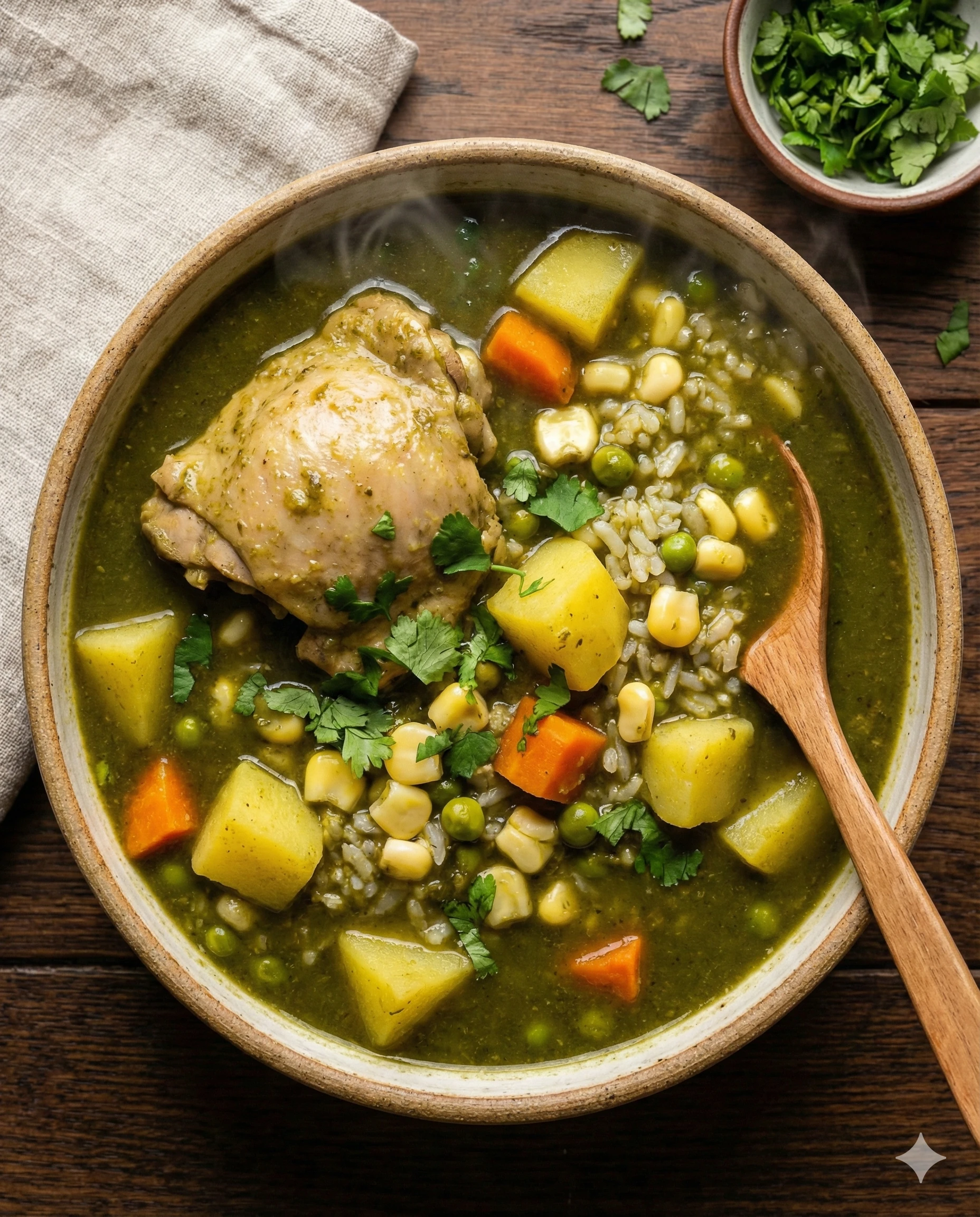
A green Peruvian criollo soup defined by cilantro and rice. The broth is aromatic and full-bodied, with tender chicken, potatoes, and vegetables in that distinctive space between a soup and a stew.
Turn what you find into an experience you can actually bring to your kitchen.

Remove the veins and seeds from the ají amarillo and cut it into chunks. Blend it with the cilantro, garlic, and a small portion of the water until you have a smooth green paste with no large leaves or pepper pieces.
Season the chicken pieces with part of the salt, the black pepper, and the cumin. Heat the oil in a large pot and brown them for 6 to 8 minutes, turning until they are golden on several sides; remove them even though they are still undercooked in the center.
In the same pot, cook the red onion with another portion of the salt for 5 to 6 minutes, until it is soft and translucent. Add the green paste and cook for 3 more minutes, stirring, until the raw aroma fades and the bottom of the pot is stained green.
Return the chicken to the pot, pour in the remaining water, and scrape the bottom to release the browned bits. Once it reaches a boil, reduce to medium heat and cook for 12 minutes at a gentle simmer, until the broth develops flavor and an even green color.
While the broth simmers, cut the yellow potatoes into medium cubes, the carrot into small dice, the red bell pepper into short strips, and have the corn kernels ready. Add the rice, potatoes, carrot, and corn; cook for 10 minutes, then add the peas and bell pepper. Cook for 6 to 8 more minutes, until the rice is tender but not blown out, the potatoes yield when pierced, and the chicken reaches 74°C / 165°F at the thickest point or shows no pink near the bone.
Stir in the remaining salt, mix, and turn off the heat. The right consistency is brothy but full-bodied: the liquid should still run off the spoon even though the rice has lightly thickened it. Serve right away, because it will continue to thicken off the heat. And that’s it—bring it to the table while it is still piping hot.