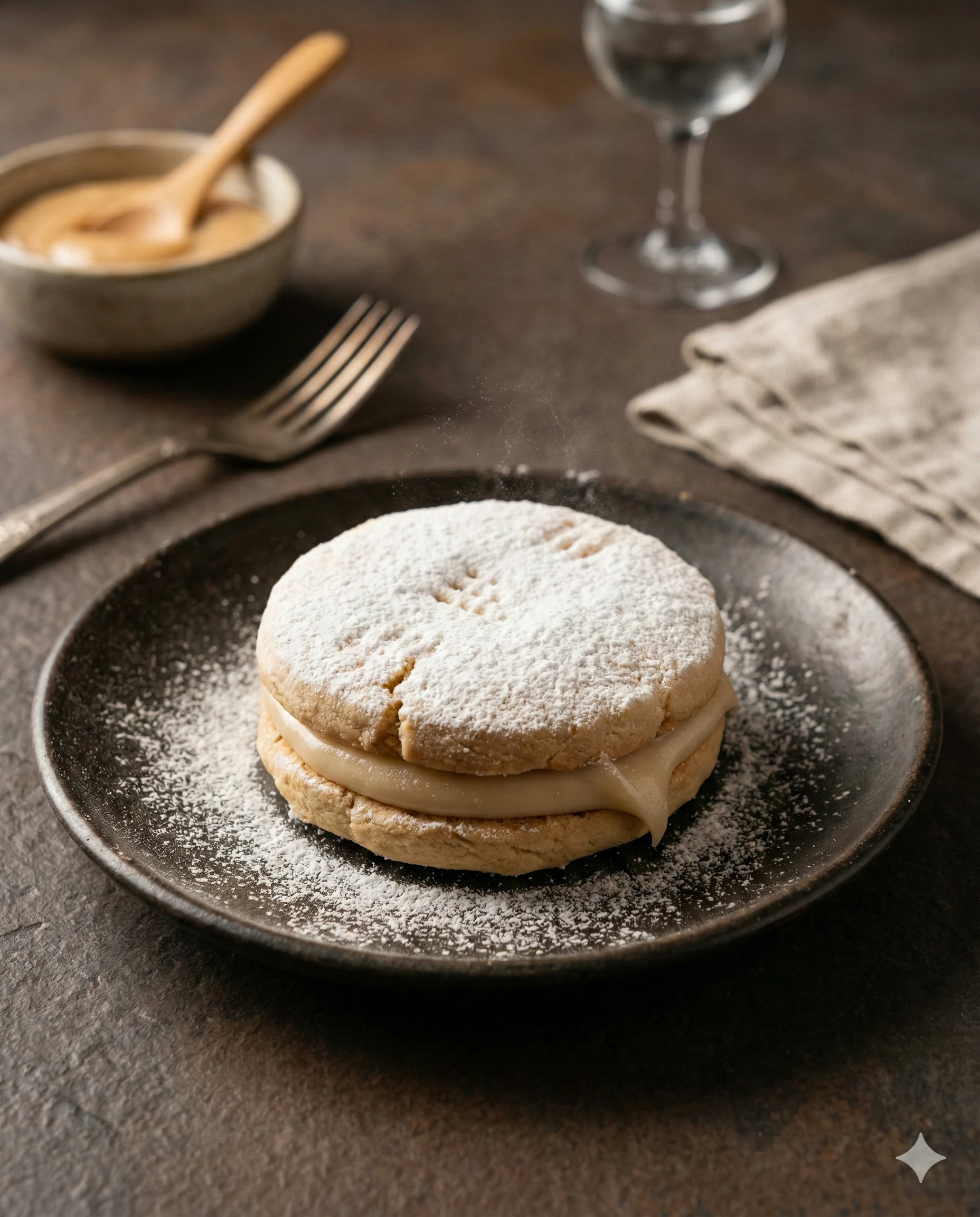
A traditional Peruvian sweet built from paper-thin layers that seem ready to take flight. Crisp yolk-rich pastry alternates with creamy manjar blanco and pineapple preserves, giving every bite a delicate crunch and a bright, deeply nostalgic sweetness.
Turn what you find into an experience you can actually bring to your kitchen.

Combine the flour, baking powder, and salt. Make a well in the center and add the egg yolks, pisco, and softened butter; work from the center outward and knead for 4 to 5 minutes, just until the dough is smooth, elastic, and no longer cracks when stretched. It should feel firm rather than sticky.
Cover the dough with a kitchen towel and let it rest for 15 minutes at room temperature. It is ready when it feels relaxed and an indentation does not immediately spring back; this makes it much easier to roll almost translucent.
Divide the dough into small portions and roll them to about 1 to 1.5 mm thick, thin enough that you can almost see the work surface through them. Cut 36 discs about 6 cm wide and prick each one several times with the tip of a knife; this controls large bubbles while still allowing the edges to lift slightly, which is part of the volador's characteristic shape.
Arrange the discs on a baking tray lined with parchment paper and bake at 175°C for 10 to 12 minutes, working in batches if necessary. Remove them when they are dry, firm, and pale, with slightly lifted edges; do not wait for deep browning. Let them cool for about 10 minutes, until they can be handled without bending or breaking.
Build each alfajor with three discs: spread manjar blanco over the first, add a second disc and cover it with pineapple preserves, then finish with the third without crushing the layers. Repeat to make 12 pieces and sift the powdered sugar over the tops. They should crack delicately on the first bite and turn creamy in the center, with pineapple cutting through the richness of the manjar. And that's it! If a few edges point upward, even better—that is why it is called a volador. 😌