Lean pork salted and dehydrated until dry, firm, and concentrated, a regional variation of the old Andean preservation method. Curing draws out moisture while slow drying intensifies flavor. Bold, practical, and ready to bring character to soups, stews, and highland dishes.
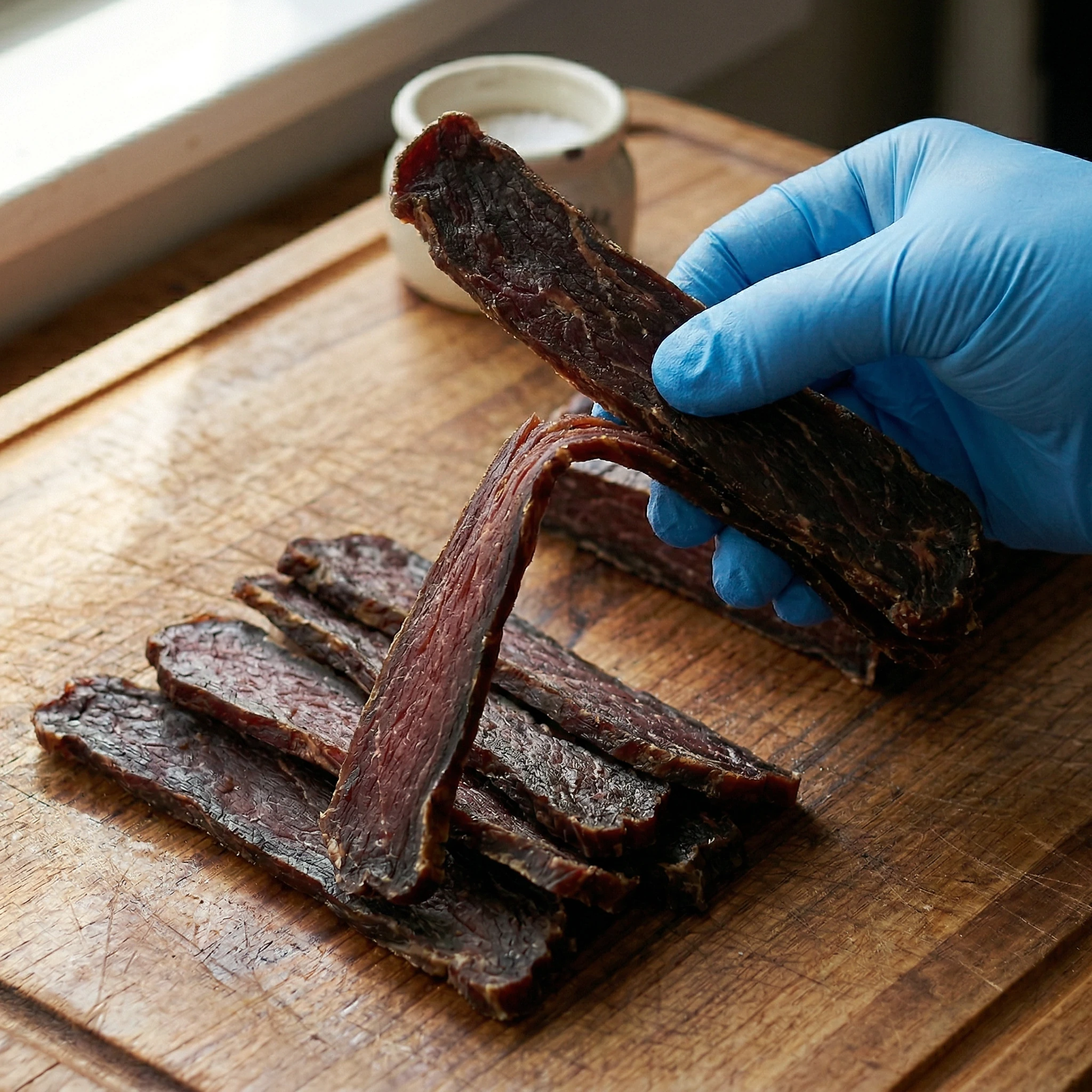
Trim all visible fat from the lean pork and cut it into even slices about 5–6 mm thick. Weigh the cleaned meat so the curing ratio remains accurate. The pieces should be thin and uniform, without thick areas that could retain moisture.
Rub the slices thoroughly on both sides with the salt, arrange them together in a container, and refrigerate for 12 hours. Afterwards, the meat should have released plenty of liquid and feel firmer, denser, and darker, showing that the salt has drawn out moisture.
Quickly rinse the slices with the cold water to remove loose surface salt, then dry them very thoroughly with paper towels. Before going into the oven they should feel dry to the touch with no visible droplets.
Arrange the slices separately on a rack set over a baking tray. First heat them in a 160°C oven until several pieces reach at least
Turn what you find into an experience you can actually bring to your kitchen.

Let the charqui cool for 25 minutes before storing it. It should be dry, firm, non-sticky, and smell cleanly of salted meat, never sour or rancid. With a homemade process, do not assume room-temperature shelf stability without technical moisture verification; keep it refrigerated or frozen until needed. And that’s it—salt, time, and pork transformed into a powerful highland cooking base.