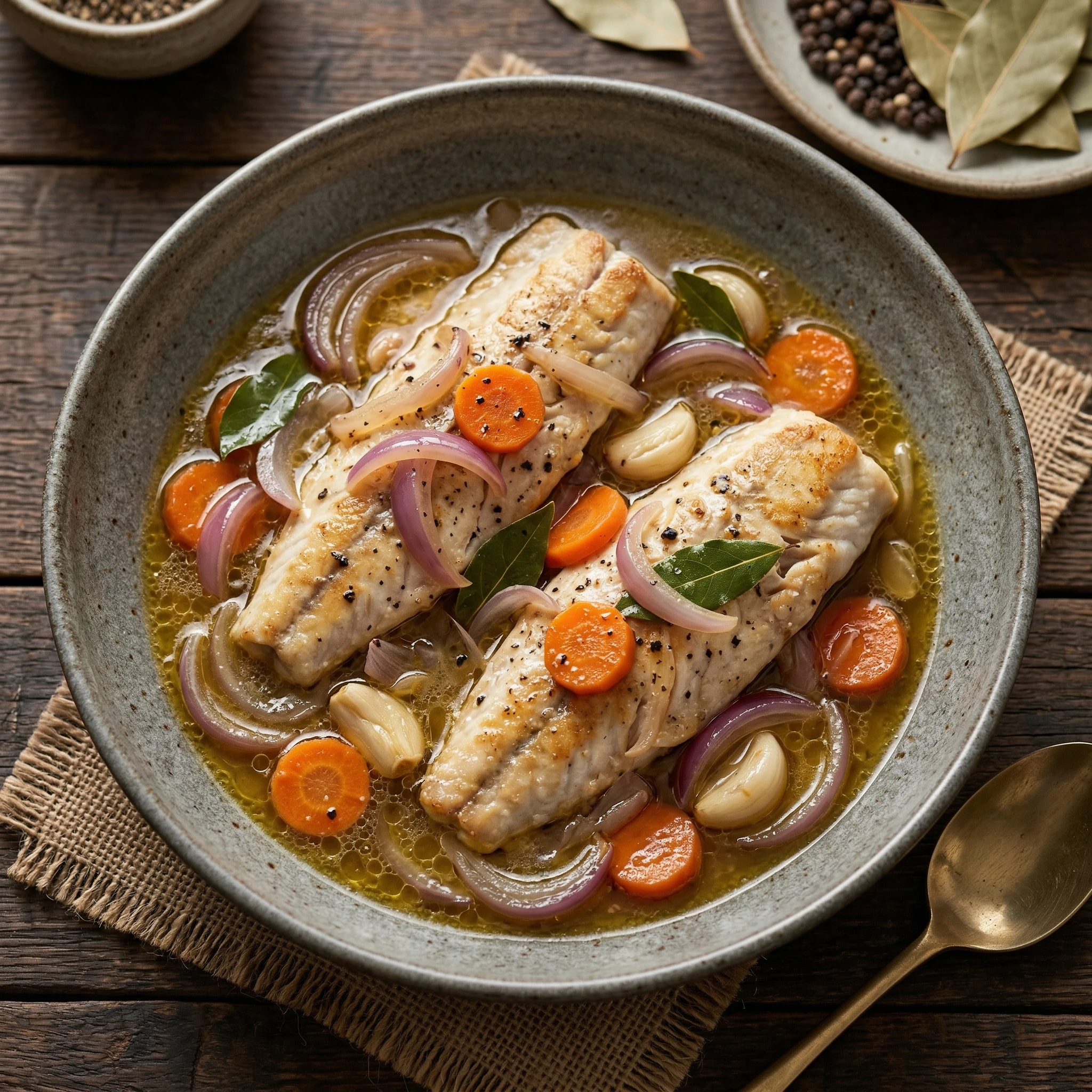
Mackerel lightly seared, then covered with hot escabeche: vinegar, white wine, oil, and vegetables cooked until sweet and soft. With rest, the acidity rounds out and the fish turns more tender while staying unmistakably briny. This is patience cooking: the next day, everything tastes clearer and more refined.
Turn what you find into an experience you can actually bring to your kitchen.

Clean the fresh mackerel into fillets or loins, removing visible bones. Dry it very well, season with the fish salt and ground black pepper, and let it rest for 10 minutes while you prepare the vegetables.
Cut the red onion into thick slivers, the carrot into thin sticks and the garlic into slices. Have everything ready before frying, because escabeche comes together fast and does not forgive improvisation.
Coat the mackerel in a thin layer of wheat flour and shake off the excess. Heat the searing olive oil and brown the fish for 2 minutes per side, just until colored; it will finish settling in the hot escabeche.
In a clean pot, heat the escabeche olive oil and cook the red onion, carrot and garlic for 6 to 8 minutes, until the onion is soft and the carrot flexible, but not falling apart.
Add the sweet paprika, white wine, wine vinegar, water, bay leaves, whole black pepper and escabeche salt. Simmer gently for 8 minutes, until the alcohol cooks off and the acidity tastes aromatic, not raw.
Arrange the seared mackerel in a deep dish and cover it with the hot escabeche and its vegetables. The fish should be well coated; if any piece stays dry, the acidity cannot do its magic.
Let it rest for 45 minutes before serving at room temperature, or chill it for later. Finish with parsley if using it; it should taste acidic, juicy and cleaner as it settles.