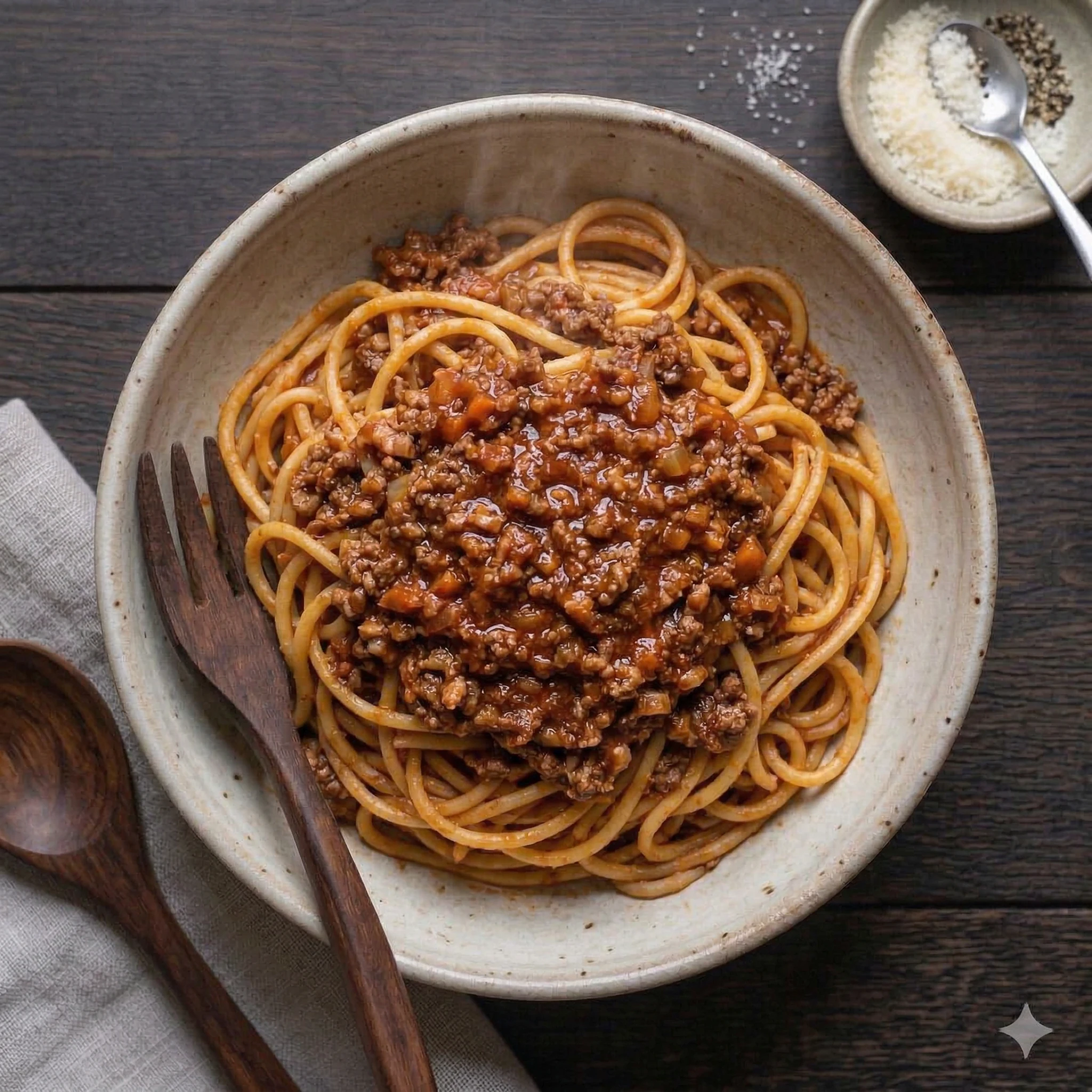
Spaghetti with a proper ragù: more meat than tomato, a sweet base of onion, carrot, and celery, pancetta, wine, and slow cooking that turns everything dark, glossy, and deeply savory. Milk rounds out the tomato without making the sauce creamy, while Parmesan comes in only at the end. This is CookPilot's home version: patient where it matters, without garlic, oregano, or shortcuts into generic meat sauce.
Turn what you find into an experience you can actually bring to your kitchen.

Finely chop the white onion, carrot, celery, and pork pancetta; also dice the tomato into small pieces. Do not blend the soffritto: the goal is tiny vegetables that slowly disappear into the ragù, not a purée.
Heat the olive oil in a pot over medium-low heat and add the pancetta. Cook for 3 to 4 minutes, until it begins to render fat and sizzle. Add the onion, carrot, and celery and cook for 8 to 10 minutes, stirring often, until they are very soft, sweet, and translucent without browning.
Raise the heat to medium-high and add the ground beef, a small portion of the salt, and half of the black pepper. Break up large clumps and cook for 8 to 10 minutes, allowing the meat to lose its moisture first and then sizzle and develop deeply browned spots. Do not move on while it is merely gray and wet; that browning carries much of the final flavor.
Pour in the red wine and scrape the bottom of the pot; cook for 2 to 3 minutes, until the alcoholic smell has nearly disappeared. Add the tomato, tomato paste, and vegetable stock, stir, and bring just to a simmer. Lower the heat, cover with a small gap, and cook for 60 minutes at the gentlest bubble. Add the fresh milk, remaining black pepper, and another portion of the salt, then cook for 60 minutes more, stirring occasionally, until the ragù is thick, glossy, deep reddish-brown, with its fat integrated into the sauce. If it becomes too dry too soon, loosen it with small amounts of the liquid already in the pot rather than adding more tomato.
When the ragù has about 12 minutes left, bring almost all the water to a strong boil in a large pot and add the remaining salt. Cook the pasta until 1 minute before the package's al dente time. Before draining, reserve about one cup of the cooking water.
Transfer the drained pasta to the ragù and toss over medium heat for 1 to 2 minutes, adding only as much of the reserved cooking water as needed for the sauce to become silky and cling to every strand without pooling in the bottom. Turn off the heat and serve with the Parmesan cheese. The right result is firm pasta, thick ragù, and meat integrated into the sauce—not a mound of tomato sitting on top. Bolognese rewards patience, and you can taste it. 🍝