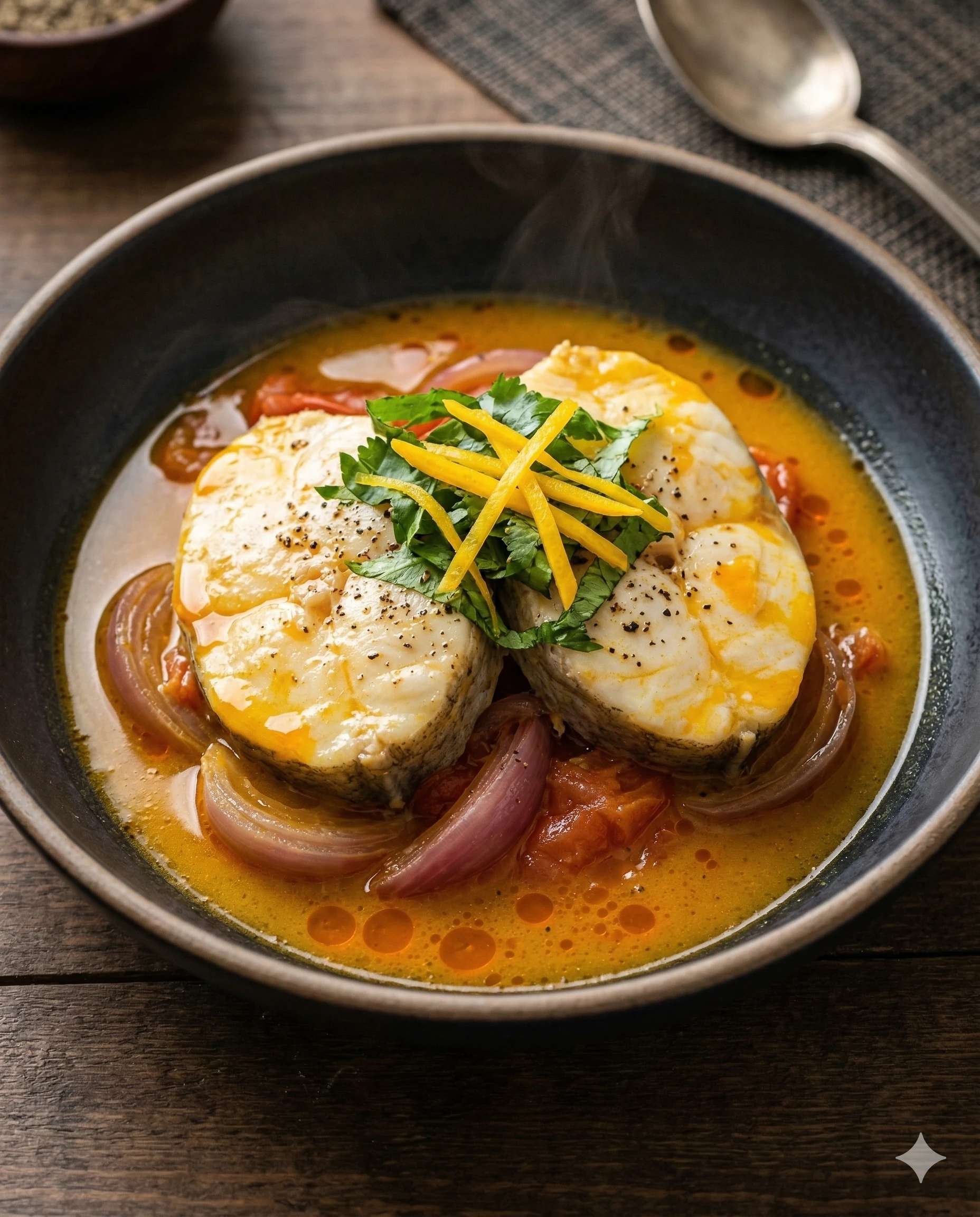
A Peruvian seafood classic cooked in its own juices. Rock fish stays succulent beneath onion, tomato, ají amarillo, and chicha de jora, with a short broth that soaks into the cassava and rice without turning into soup. Steaming and deeply aromatic, it is the kind of dish that makes the first bite hard to wait for.
Turn what you find into an experience you can actually bring to your kitchen.

Peel the cassava, cut it into medium pieces, and remove the central fiber if exposed. Place it in a pot with most of the water and part of the salt; simmer for 18 to 22 minutes, until tender when pierced with a knife but still holding its shape. Drain and keep warm.
In another pot, combine the rice with another portion of the water and salt. Once it boils, reduce the heat to low, cover, and cook for 14 to 16 minutes, until no liquid remains visible and the grains are tender and separate. Turn off the heat and leave covered while you finish the fish.
Ask for the rock fish to be cut into four thick portions. Pat it dry and season with the black pepper, cumin, and another portion of the salt. Cut the onion, tomato, and ají amarillo into thick strips; reserve about half of each to cover the fish.
Heat the oil in a wide pot over medium heat and cook the garlic with half of the ají amarillo for 2 minutes, just until fragrant while the garlic remains pale. Add half of the onion and tomato and cook for 2 more minutes: they should begin releasing juice, not turn into a dry sauté.
Set the fish over the base and cover it with the remaining onion, tomato, and ají amarillo. Add the chicha de jora, remaining water, most of the cilantro, and the remaining salt; cover and cook over low heat for 8 to 10 minutes, without stirring, until the fish is opaque through the center, juicy, and flakes when gently pressed. If the broth needs mixing, move the pot by its handles instead of breaking up the fish.
Turn off the heat and finish with the remaining cilantro. Serve each portion with plenty of onion, tomato, and short broth, alongside the cassava and rice to soak up the juices. If the fish still holds together but flakes easily and the broth tastes rich yet light, it came out just right. And that’s it—bring it to the table steaming hot; this sudado needs no time at all to wake up an appetite.