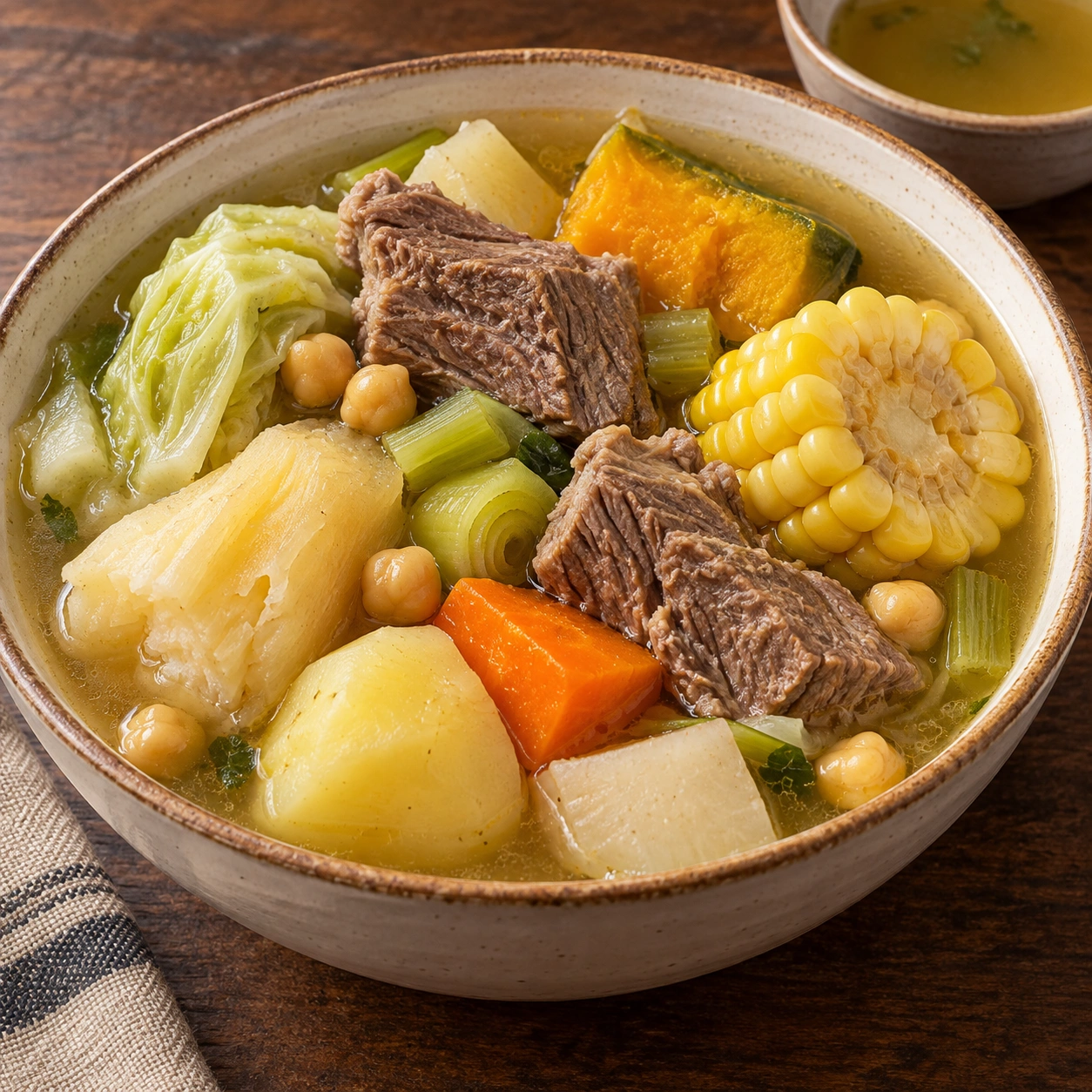
A Lima classic that turns one generous pot into a two-part lunch. First comes a clear, deeply savory broth; then tender beef arrives with intact tubers, corn, cabbage, and chickpeas. It has the quiet abundance of a meal that invites one serving, a long conversation, and inevitably another trip to the platter.
Turn what you find into an experience you can actually bring to your kitchen.

Cut the beef into large pieces about 5 cm wide. Wash the leek, celery, and mint. Place the beef in a large pot with the water, two fifths of the leek, two fifths of the celery, all of the mint, and half of the salt. Bring to a boil and, during the first 15 minutes, skim away the foam and impurities that rise to the surface.
Once the broth boils, lower the heat and cook for 75 minutes with the pot partially covered. Keep only a gentle simmer; vigorous bubbling will cloud the broth. Meanwhile, cut the carrots, turnip, cassava, corn, potatoes, sweet potatoes, squash, and cabbage into large pieces, and leave the remaining leek and celery in broad sections.
When the beef begins to yield when pierced, add the cassava, corn, carrots, turnip, and the remaining leek and celery. Simmer gently for 12 minutes. The pieces should have room to move without the pot boiling aggressively.
Add the white potatoes, sweet potatoes, and macre squash. Cook for another 10 to 12 minutes, until the potatoes are nearly tender and the cassava begins to split slightly along the center. Do not stir aggressively; gently shake the pot if the pieces need redistributing.
Add the cabbage, cooked chickpeas, and the remaining salt. Cook for only 5 minutes, until the cabbage softens without falling apart and the chickpeas are heated through. Taste the broth: it should be clean and substantial rather than overly salty or thick.
Turn off the heat and let the pot rest for 5 minutes. Carefully remove the beef, tubers, and vegetables and arrange them on a large platter; serve the broth very hot in separate bowls. Each person can build the second course with some beef and several accompaniments, spooning broth over them if desired. When one pot manages to make its first course create an appetite for the second, the sancochado has done exactly what it came to do.