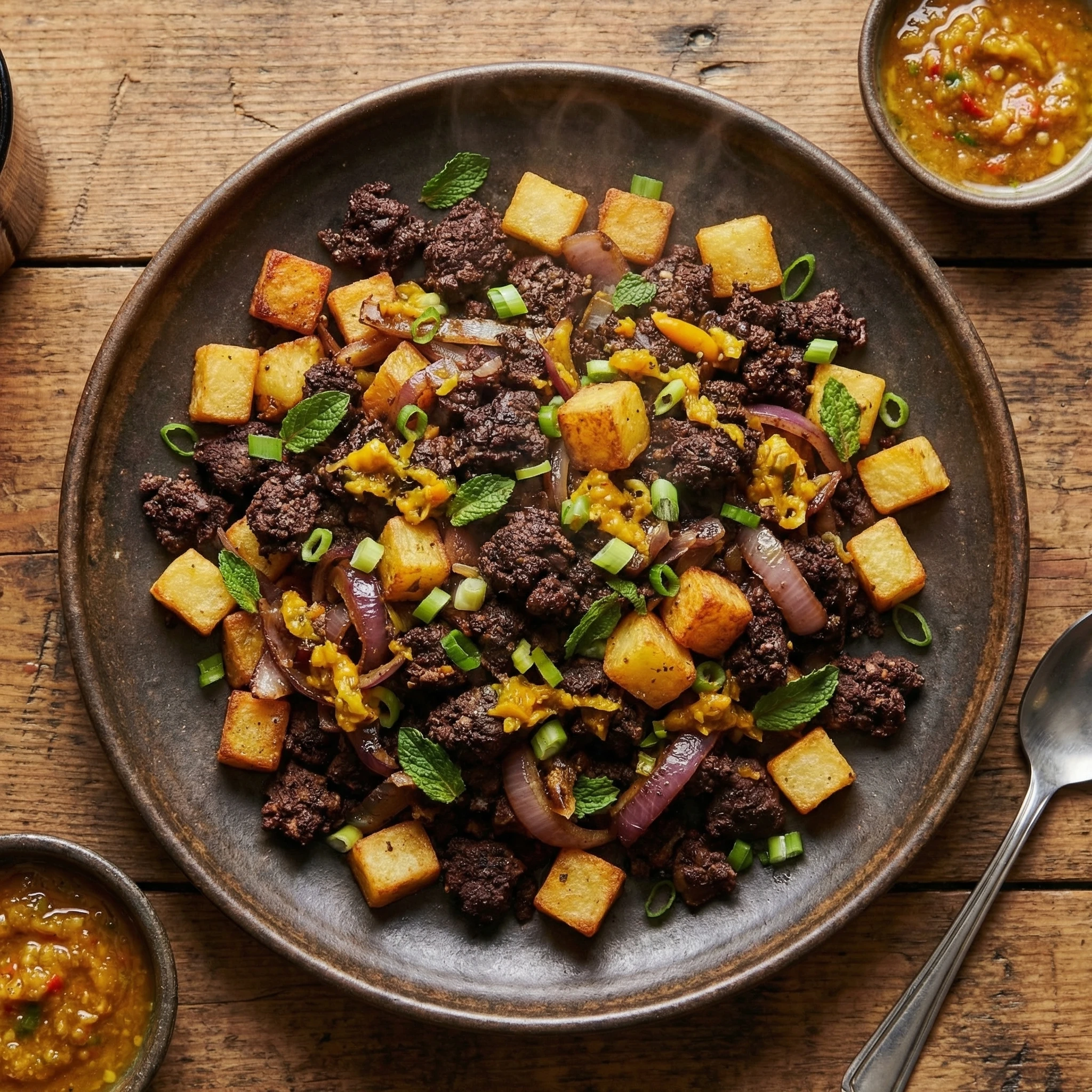
A market-style Peruvian classic with unapologetically criollo character. The chicken blood turns crumbly and juicy with yellow chili, scallions, and the unmistakable freshness of mint, with tender yuca alongside. Done right, it turns one of Peru's humblest ingredients into the kind of dish that keeps the spoon coming back.
Turn what you find into an experience you can actually bring to your kitchen.

Peel the yuca, cut it into medium pieces, and remove the thick central fiber if visible. Cook it with most of the water and part of the salt for 18 to 20 minutes, until tender and just beginning to split slightly through the center. Drain and keep covered so it stays warm without drying out.
Place the raw chicken blood in the pot with the remaining water, another portion of the salt, and a small portion of the mint. Simmer for 12 to 15 minutes, stirring and breaking up large clots, until fully coagulated and at least 74°C / 165°F in the thickest pieces. Do not rely on color alone to judge safety. Drain well, let cool briefly, then finely chop or crumble it. Wash utensils and surfaces that touched the raw blood with hot soapy water before continuing.
Heat the vegetable oil in a wide skillet over medium heat. Cook the red onion for 5 minutes, until soft and just beginning to brown around the edges. Add the garlic, yellow chili, cumin, oregano, black pepper, and the remaining salt; cook for another 3 minutes, stirring often, until the seasoning base is fragrant, glossy, and no longer tastes of raw chili.
Add the cooked blood to the seasoning base and sauté for 4 to 5 minutes, breaking it apart with the spoon until crumbly, moist, and thoroughly seasoned, never dry. Add half of the scallions and cook for 1 minute. Turn off the heat, fold in the remaining mint and scallions, and mix only enough to preserve their fresh aroma.
Serve the sangrecita piping hot with the yuca alongside. Aim for a loose mixture with distinct crumbles, fresh scallion, and mint showing up at the end of each bite. Done! Spoon some over the yuca and it becomes obvious why this dish has survived generations without needing any luxury at all. 😌