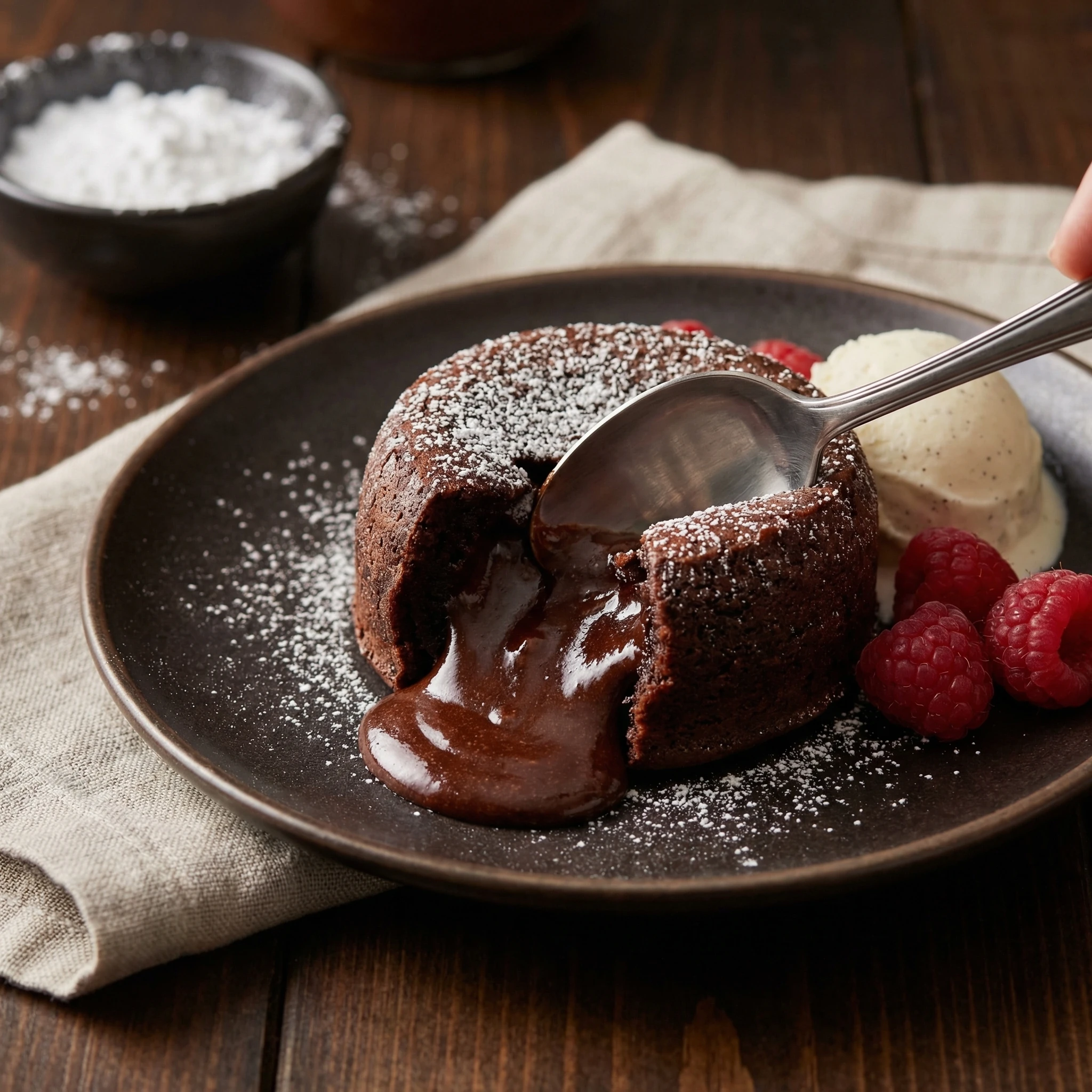
A small chocolate spectacle: tender cake barely set around the edges with a dark molten center that flows when opened. Intense, buttery and elegant, yet surprisingly simple when the oven and timing do exactly their job.
Turn what you find into an experience you can actually bring to your kitchen.

Preheat the oven to 220°C. Thoroughly grease 4 cavities of the pan with a small amount of the butter, then dust with the cocoa powder, rotating the pan to coat the bottoms and sides. Tap out the excess; a thin, complete coating helps each cake release intact.
Melt the bittersweet chocolate with the remaining butter in the microwave in 20-second bursts, stirring between each one. Stop as soon as the mixture is smooth and glossy; it should be warm when incorporated, not piping hot.
Whisk the eggs, egg yolks, sugar, vanilla, and salt for 2 minutes, until paler and thicker and the mixture falls from the whisk in a brief ribbon.
Pour the warm chocolate mixture into the eggs and combine gently. Sift the flour over the batter and fold only until it disappears; the mixture should remain glossy, flowing and thick. Stop mixing once combined: the goal is just enough structure to hold the lava, not turn it into ordinary cake.
Divide the batter among the 4 prepared cavities and bake for 7 to 9 minutes. Remove them when the edges are set and slightly risen but the centers still look soft and jiggle when the pan is moved. If you wait until the entire center looks fully set, the lava has already lost the battle.
Let the cakes rest for exactly 1 minute. Carefully run a paring knife around the edges and unmold each cake onto its plate. Serve immediately: the exterior should be tender and just set, while the center flows hot, dark and silky when opened. And that's it! Now comes the scientifically mandatory part: cut it open and watch the lava. 🍫🌋